ROX

Reflectance Measurement System

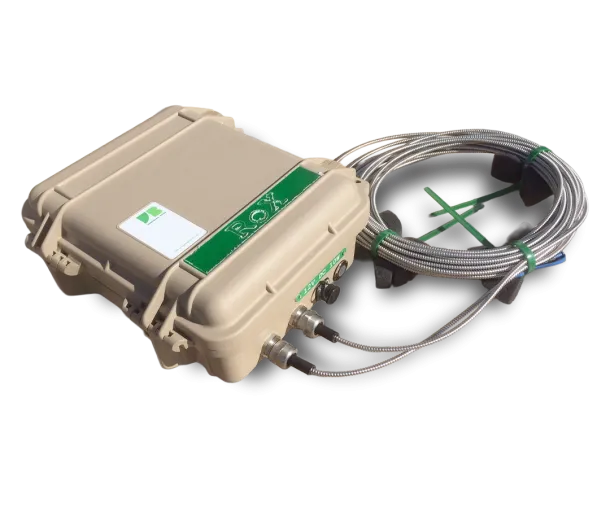
The reflectance box (RoX) is a robust and easy-to-use tool for collecting hyperspectral time series data in diverse environments. It has full autonomous operation, a rugged weatherproof design and low power consumption, making it extremely valuable for all kinds of reflectance measurements.
Description

The ROX spectrometer represents the evolution of prototype instruments such as the Multiplexer Radiometer Irradiometer (MRI), SFLUOR box and SIF-System developed from a collaboration between Jülich Research Center and the Remote Sensing of Environmental Dynamics Laboratory of the University Milano Bicocca. The basic routines of the ROX are based on SPECY (Forschungszentrum Jülich, IBG-2: Plant Sciences).It represents the evolution of prototypes such as Multiplexer Radiometer Irradiometer (MRI), SFLUOR box and SIF-System developed from a collaboration between Jülich Research Center and the Remote Sensing of Environmental Dynamics Laboratory of the University Milano Bicocca. The basic routines of the RoX are based on SPECY(Forschungszentrum Jülich, IBG-2: Plant Sciences).

The ROX is designed for long term measurements of solar radiance, reflected radiance and reflectance. Its robustness and flexibility make the RoX suitable for several applications, including vegetation monitoring, water quality assessment, and snow and ice properties).

The system covers the Visible/Near Infrared region (300- 950 nm). Upward and downward channels ofthe ROX allow sequential measurement of solar irradiance and reflected radiance from the canopy.

reflectance measurement system
ROX product
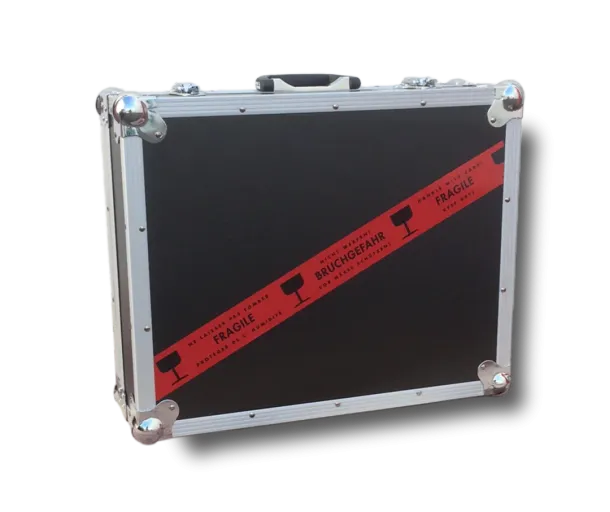
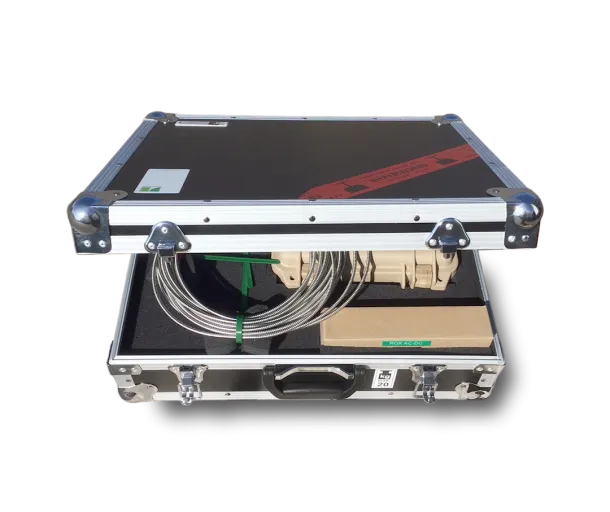
Case to protect and transport ROX product

Specifications

OPTIC SPEC

  • Wavelength range

    VIS-NIR: ~ 400–950 nm (other options also available on demand)

  • Spectral Sampling Interval (SSI)

    ~ 0.65 nm

  • Spectral resolution (FWHM)

    ~ 1.5 nm

  • Signal to Noise Ratio (SNR)

    ~ 250

  • Field Of View (FOV)

    Upwelling radiance ~ 25°. Downwelling radiance 180°


OPERATIONAL

  • Signal Optimization

    Automatic adaption to varying light conditions

  • Dark current

    Accurate dark current determination at each measurement cycle

  • Manual acquisition

    Interface software for manual measurement and calibration

  • Automatic acquisition

    Fully autonomous measurement mode for unattended data acquisition 20 seconds under bright sunshine 60 seconds in overcast conditions

  • Quick measurements

    10 seconds under bright sunshine 30 seconds in overcast condition

  • Stability

    Reference system stability check and uncertainty estimates

  • Simultaneous metadata

    Temperature, GPS position, GPS time

  • Data Display

    Live assessment of the systems status

  • Data storage

    SD card up to 32 GB (12 months of measurements)

  • Case

    Robust and Waterproof housing based on the 1200 Pelicase

  • Dimension

    300 x 250 x 130 mm

  • Power supply

    12 Volt. From battery or solar panels

  • Power consumption

    800 mAh

  • Energy saver

    Day/night switch for energy saving

  • Interfaces

    RS232 via cable and wireless


OPTIONAL

  • Dust Protection

    Additional dust protection for Cosine Receptors

  • Fiber optics

    Flexible length of fiber optics according to user needs

  • Power supply

    Solar panel and battery

  • Field use

    Backpack option including small battery packs


FAQ

How do I process ROX data?

To generate values of reflectance, radiance and numerous vegetation indices, an open source R-package is available at github. For simple use, the package has a graphical user interface allowing the user to process years of data with a few clicks.

Can I power the ROX from a battery?

Yes. The ROX accepts 9-14 V DC via the main plug. An adapter cable to power the ROX via a LiPo battery can be ordered to allow hours of battery-powered function.

Can the ROX be moved easily between measurement sites?

Yes! Its small case and low power consumption make the ROX a perfect field spectrometer. Having an upward-looking and downward-looking fiber also eliminates the need for frequent white reference measurements. The USB connection, or wireless communication, can be used to trigger the instrument. Don´t forget to checkout JB’s fiber leveling gimbal to ensure measurements are always at nadir.

ROX product illustration

Publications


Proximal remote sensing: an essential tool for bridging the gap between high-resolution ecosystem monitoring and global ecology. New Phytologist. 2025.

Zoe Amie Pierrat et.al.

Weathering crust formation outpaces melt-albedo feedback on blue ice shelves of East Antarctica. Commun Earth Environ 5, 740 (2024)

Traversa, G. et.al.

Cryoconite holes geomorphometry, spatial distribution and radiative impact over the Hells Gate Ice Shelf, East Antarctica. Annals of Glaciology. 2024

Giacomo Traversa et.al.

Evaluation of PRISMA Products Over Snow in the Alps and Antarctica. Earth and Space Science. 2024.

B. Di Mauro et.al.

Differences in vegetation index values using measurements from two azimuth and multiple zenith viewing angles. International agrophysics 2024.

Hyun-Dong Moon et.al.

Experimental determination of the Atmospheric heating Rate due to light absorbing aerosol in remote high Altitude sites (EXARA). International Foundation HFSJG. 2024.

Niccolò Losi, Luca Ferrero.

Towards a standardized, ground-based network of hyperspectral measurements: Combining time series from autonomous field spectrometers with Sentinel-2. Remote Sensing of Environment. 2024

Paul Naethe et.al.

Heterogeneous marine robotic system for environmental monitoring missions. IEEE 2023.

Fausto Ferreira et.al.

Calibration and Validation from Ground to Airborne and Satellite Level: Joint Application of Time-Synchronous Field Spectroscopy, Drone, Aircraft and Sentinel-2 Imaging

Paul Naethe et.al.

Very High-Resolution Imagery and Machine Learning for Detailed Mapping of Riparian Vegetation and Substrate Types

Edvinas Rommel et.al.

Iterative design of a high light throughput cosine receptor fore optic for unattended proximal remote sensing. Journal of Applied Remote Sensing. 2022.

Andreas Burkart et.al.

Preliminary Investigation on Phytoplankton Dynamics and Primary Production Models in an Oligotrophic Lake from Remote Sensing Measurements. Sensors 2021.

Ilaria Cesana et.al.

Retrieval of Dust Properties From Spectral Snow Reflectance Measurements. Front. Environ. Sci., 2021.

A. Kokhanovsky et.al.

Deep Learning with WASI Simulation Data for Estimating Chlorophyll a Concentration of Inland Water Bodies. Remotes sensing 2021.

Philipp M. Maier et.al.

Changes of NOx in urban air detected with monitoring VIS-NIR field spectrometer during the coronavirus pandemic: A case study in Germany. Science of The Total Environment. 2020.

Paul Näthe et.al.

Proximal VIS-NIR spectrometry to retrieve substance concentrations in surface waters using partial least squares modelling. Water Supply ws2018177.

A. Wagner S. Hilgert T. Kattenborn S. Fuchs

PRISMA hyperspectral satellite mission: first data on snow in the Alps, EGU General Assembly 2020

Di Mauro et.al.

Characterisation of reflectance and chlorophyll fluorescence anisotropy – defining requirements for an experimental setup. Geophysical Research Abstracts, vol. 20, EGU2018-16936, 2018. EGU General Assembly 2018

Biriukova K. Julitta et.al.

Visit Our Other Products