
One Custom Solar Tracker Earned Academic Honours
One Custom Solar Tracker Earned Academic Honours

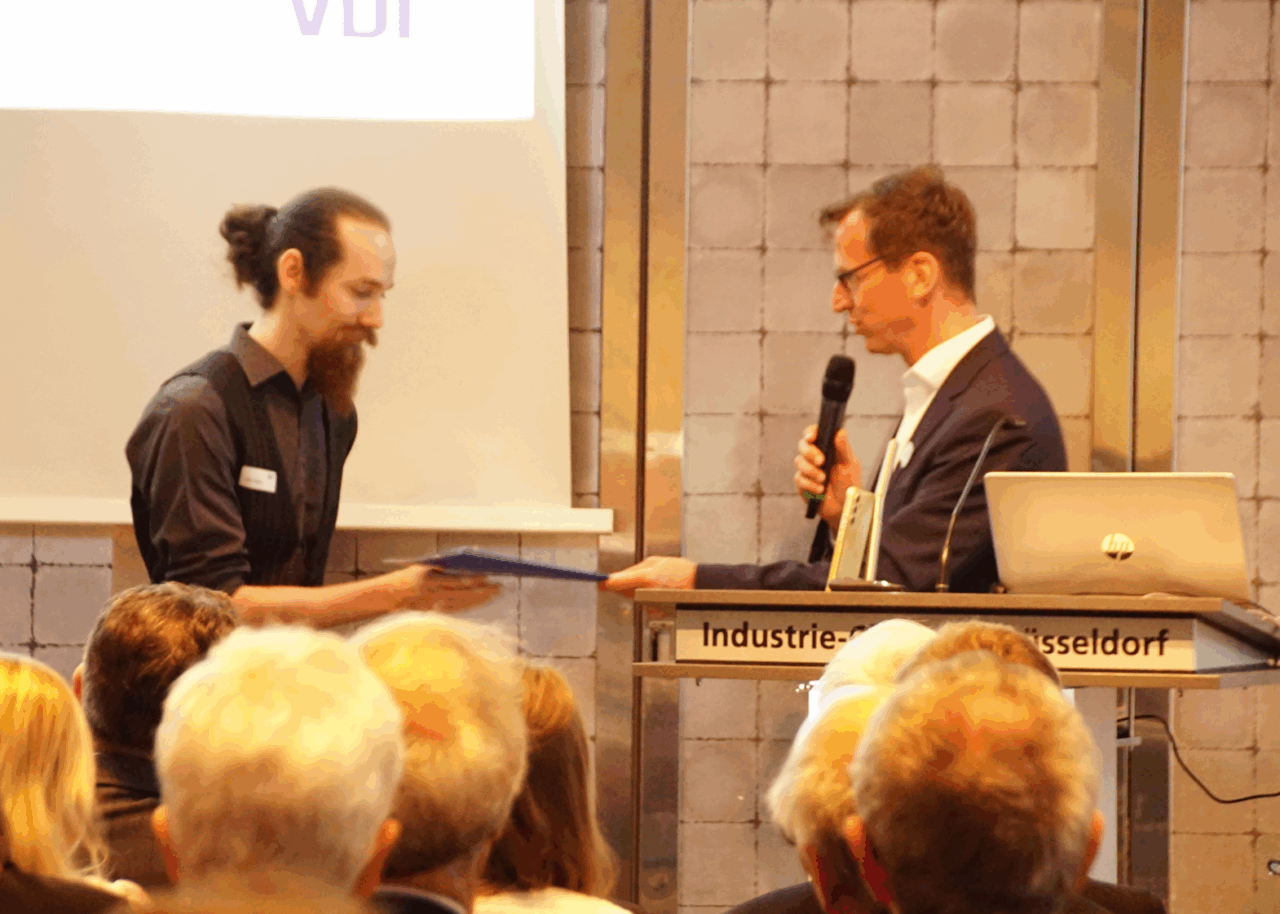
JB Hyperspectral Devices is proud to celebrate the success of Marc Krause, one of our in-house technicians, whose bachelor’s thesis was recently honoured with the prestigious University Award for Outstanding Technical Theses by the VDI BV Niederrhein.

Marc’s thesis, “Development of an electromechanical system for differentiated hyperspectral measurement of direct and diffuse solar radiation,” was developed in close collaboration with JB Hyperspectral Devices and Hochschule Düsseldorf (HSD), Marc’s project tackled a highly specialised engineering challenge: Designing a solar tracker compatible with JB Hyperspectral’s FLoX system—without ever moving the sensitive optical sensors.

The FLoX is a cutting-edge field instrument used to measure solar-induced fluorescence (SIF) and other radiative properties, essential for monitoring plant health and energy absorption. These measurements depend on optical fibres that are extremely sensitive to motion, meaning any physical disturbance can compromise data quality. Typical solar trackers on the market so far fail to meet this requirement as they move the measuring device as well. Marc’s solution?

Build a custom solar tracker that continuously shades the receptors from the sun, while the receptors stay completely still.

Marc designed and built an electromechanical shading system that allows the cosine receptor (a sensor used to measure irradiance) to receive alternately:

  • Total global radiation (direct + diffuse sunlight)
  • Only diffuse radiation (by shading out direct sunlight)
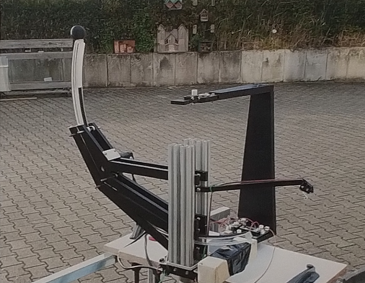
By calculating the difference, the system can determine the direct radiation component, a crucial metric in interpreting SIF and understanding how different wavelengths affect photosynthesis.

While Marc independently drove the project forward, the support of JB Hyperspectral was critical, especially in the early concept phase.

“The continuous communication made it possible to create and constantly adapt the design to the needs of JB Hyperspectral Devices,” he said. “The atmosphere and encouragement to figure things out also helped.”

That’s something JB Hyperspectral takes seriously: empowering students and early-career engineers with hands-on experience and challenges that matter. This thesis directly supports the optimisation of the FLoX system, bringing meaningful innovation to environmental science. Congratulations, Marc!

Continue reading

FLOXES In The Brazilian Tropical Rainforest

FLOXES In The Brazilian Tropical Rainforest

In September 2025, JB Hyperspectral Devices had the opportunity to be a part of an exciting multidisciplinary project. Two of our team members travelled to Santarém, Brazil to install two FloX devices as part of the Carbon Amazon Rainforest Airborne project (CarbonARA).  CarbonARA is a European Space Agency project led by the National Centre for Earth Observation (NCEO) and King’s College London with multiple other partners from Europe and Brazil. Consisting of both ground-based and airborne measurement systems, the main objectives of the project is to:

  1. Assess the impacts of logging and forest fires on health and atmospheric composition
  2. Quantify greenhouse gas fluxes across different landscapes in the Amazon region.
  3. Evaluate satellite data against detailed field measurements
  4. Improve carbon cycle models to better predict future changes

JB Hyperspectral was a part of the ground-based measurements team with installations being successfully completed in two distinct forest locations of primary and secondary forest.


The first installation was completed in the Floresta Nacional dos Tapajós (at KM67 experimental site) located approximately 100km south of the city of Santarém. This location consisted of protected primary forest with an extremely high level of plant biodiversity and dense foliage. The FloX was installed at the top of a pre-existing 45 meter high walk-up tower with a perfect view over the canopy. The downward facing fibre optics were positioned approximately 4 meters away from the tower to measure a species of tree with a large broadleaf canopy.


The second installation was completed at an experimental farm approximately 37 km from Santarém operated by the Federal University of Western Pará (UFOPA). This location consisted of partially degraded secondary forest with a newly installed 42 meter high climbable tower. The FloX was the first instrument to be installed on this new tower at a height of approximately 35 meter high and overlooked a mixed canopy of leafy trees and palms.

Both installations were completed before the airborne campaign began with measurements expected to continue until 2027 and beyond. This field campaign presented a great opportunity for JB Hyperspectral to continue expanding its broad network of FloX installations while helping to contribute to the understanding of greenhouse gas emissions in the Amazon and their responses to ongoing environmental change.

Continue reading